Friday, 8 April 2011

Antichrist (2009) - Lars von Trier

The Dogme 95 manifesto brought out the best in von Trier. His ability to understand the darkest depths of the human psyche, coupled with the shaky, nervous, traumatized cinematography that the manifesto deemed to be 'true cinema', has lead to works such as Breaking the Waves (1996) and The Idiots (1998) being widely regarded as some of the finest examples of psychological realism that exist in cinema today. Antichrist (2009) represents von Trier's attempt to disown a brainchild that was starting to misbehave, and whilst some will watch with intrigue at what von Trier is capable of, free of the prescriptive shackles of Dogme 95, and with the latest and greatest cinema gadgets at his disposal; others will be wondering if the once famously outspoken champion of the avant-garde has sold his soul to Hollywood.

Briefly placing the intriguing notion of von Trier's giant leap into the mainstream on hold, Antichrist is a film about a couple who attempt to work through the trauma of losing their child. Known only as 'He' (Willem Dafoe) and 'She' (Charlotte Gainsbourg), the couple retreat to the woods in order to overcome the cataclysmic sense of loss and hopelessness that the death has created. Whilst 'He', being a therapist, can rationalise the grief, 'She' is battered by every destructive emotion it is possible to feel, and the intolerable burden of guilt quickly transforms into blame for a partner who remains (to her at least) absurdly unaffected. Suffice to say that the therapeutic trip to God's back garden quickly becomes a bloody descent into hell...Imagine Fatal Attraction (1987) having tearful, angry sex with Hostel (2005). Not nice, is it?

And indeed it is the asphyxiating, sometimes shocking nature of Antichrist that constitutes much of its immediate appeal. The term 'torture-porn' has been used to describe the new generation of horror films such as Saw (2003), Hostel (2005) and most recently A Serbian Film (2010); it is unflinching and highly graphic horror that satisfies an audience's sadomasochistic desires, Antichrist sits firmly within this canon of horror. Despite the fact that this controversial and visceral brand of  horror translates well into the unflinching and aggressive mantras of the Dogme manifesto, the horror elements of this film are a curious failure. 

Anyone who has seen The Idiots will know that von Trier is no stranger to controversy, but whereas in The Idiots the real shock is the subversive political and philosophical theory it simulates, in Antichrist the shocking elements are almost entirely gratuitous. And therein lies Antichrist's greatest weakness, it lacks any meaningful direction. von Trier lamely attempts to create a political commentary by naming his protagonists 'He' and 'She', presumably to suggest that they represent a universal archetype in western society, but such attempts are swiftly undone by the fact that neither of the characters are engaging, or, for that matter, likeable. The protagonists themselves do us the favour of picking out the flaws of their partner 'She' frequently calls 'He' "arrogant", and 'He' accuses 'She', well, her numerous flaws will be made apparent in the end. But the net effect is that you don't really care about their trauma, or if they ever get over it, which is disappointing because the visual intensity of the film really makes you want to care. Maybe apathy was what von Trier was going for, though I sincerely doubt it.

To make this already faltering film worse, von Trier injects a bit of art-house wankery, again totally gratuitous. Approximately 10 minutes of the film is spent with the lens gawping at either 'He' standing by a tree, 'She' walking over a bridge or random (but don’t get me wrong beautiful) shots of the forest. It's all very nice but you find yourself asking on more than one occasion 'what's the point?' One suspects that von Trier was eager to give this film a strong visual dimension, making the most of the fact that the camcorder has been ditched in favour of a technically superiour lense, but these visually exquisite montages actually reduce, not enhance the viewing experience, sapping both momentum and meaning from the film. von Trier has never apologised for the more experimental facets of his work, I think on this occasion we are at least owed an explanation, because there seems absolutely no motive for the lengthy and bizarre still shots.

This review has perhaps been overly harsh. Antichrist is not a terrible film, and is in fact a highly unconventional horror film, but compared to its forceful, vibrant, polemic predecessors it is a distinctly tepid and listless work of cinema. I might be missing the point entirely, and the very meaning behind Antichrist is its meaninglessness, but if this is the case one can only ever 'appreciate' the film never 'like', 'love', 'disagree', 'dislike' or 'hate' it, which, as his previous works would suggest, has always been von Trier's ultimate goal as a director.

Verdict: Not a bad punt at horror, and actually pretty original in this respect. But any von Trier fan will be left feeling disappointed if they expect Antichrist to deliver the same proverbial kick to the nuts that films such as Breaking the Waves and Dancer in the Dark did. If bigger budgets and better lenses will produce similar results, let us hope that von Trier's relationship with mainstream cinema is more of a one night stand than an unhappy marriage 5/10.

Tuesday, 1 March 2011

Body of Lies (2008) - Directed by Ridley Scott

Visually stunning apocalyptic urban dystopias, an enemy that is indivisible from the ordinary civilian, a plot in which government agents are dispatched in order to sniff out the enemy and destroy them, Body of Lies bears more than just a casual resemblance to Ridley Scott's cult classic and box office smash Blade Runner. The Replicants have been traded in for Al-Qaeda, the present day Middle East, every bit as deadly, has replaced a Los Angeles thrown fifty years into a simulated future, it is a film that is covered with the trauma scars of 9/11. Despite the intriguing parallels, Body of Lies is sadly a film that falls well short of the Blade Runner benchmark.

The film opens in post-war working class UK suburbia, a bomb plot has been rumbled by special forces. As the crack team work their way around the quaint Yorkshire terrace that houses the blueprints for the next major terrorist attack (carefully dodging the milkman as they go) they are heard. The plotters know the game is up, so decide in the blink of an eye to destroy the evidence. We are then treated to a jaw dropping sensory overload, watching the house being blasted into a million pieces from every conceivable angle and with stunning attention to detail (the visible shockwaves running through the brickwork epitomise the quality of the CGI). We brace ourselves for a gripping and relentless onslaught of tense and politically loaded action. Sadly, one quickly comes to realise that Ridley Scott has played his best hand far too early.

The setting is immediately shifted to the Middle East and we are introduced to our hero Roger Ferris (Di-Caprio), an ambitious mercenary-like CIA officer based in Iraq, and his overbearing boss Ed Hoffman (a portly Crowe) who exploits Ferris' desire for progression to complete CIA missions with ruthless objectivity. In order to get to their man, the mastermind terrorist Al-Saleem, they must infiltrate all levels of Al-Qaeda, involve various groups in order to utilise their connections, and gain the trust of powerful yet extremely volatile middle eastern officials.

The audience is introduced to an endless procession of characters, some who cannot be trusted, some who can and some who fool everybody; but after about 40 minutes the power of memory is so sorely stretched that one ceases to care. Whilst Scott is attempting to lay the foundations for a big climax in which various plot strings are tied up in a thrillingly complex finale, Body of Lies grows hopelessly confusing and flat. The endless ‘meet and greet’ scenarios between Ferris and faceless middlemen grows taxing, especially when they are presented as integral to the plot, yet are bombed or gunned down only 10 minutes later. To make matters worse, a dreadful romance narrative is introduced between Di-Caprio and a Muslim nurse, so forced and wooden you would feel more inclined to believe in tooth fairies than in the legitimacy of such a plot. The net result is that the first hour or so is at best tedious and emotionally un-engaging. If Body of Lies started at a gallop, it is practically stationery by the hour mark, unable to move under the weight of its colossal cast.

One suspects that the conveyor belt of characters represents Scott's attempt to breathe life into an otherwise nondescript plot. Other than the elaborate game of cat and mouse going on between the CIA and Al Saleem, the film is not firmly rooted with a solid plot, meaning that Di Caprio and Crowe, as the two central characters, tend to float in their respective roles, lacking conviction and operating very much within their comfort zones. Though, of course, the plot is largely dictated by the novel, from which the film was adapted, one senses Scott could have done much more with his source material. A political theme is hinted at in the beginning, but remains undeveloped throughout. Not once does the film address the larger question of why America is occupying the Middle-East and why the war is necessary, it just seems to take such facts for granted. The script has words such as 'terrorist' and 'infidel' thrown in willy-nilly and with little justification, it is so wrapped up in the star-spangled rhetoric of war that it fails to address the questions of political legitimacy that would lend this film some much needed depth. Body of Lies is disconcertingly short sighted and biased in its political trajectory.

That is not to say that Body of Lies is completely bereft of value. The film is punctuated with some truly impressive action sequences. Ridley Scott does not miss his opportunity to showcase his ability in pulling off outrageously bombastic yet brilliantly entertaining action sequences, as he did in Black Hawk Down. The opening explosion, as has been mentioned, is top drawer, and there is plenty more where that came from. Perhaps the greatest triumphs of Body of Lies are the cinematography and locations, which combine to create an atmosphere in which the audience can really indulge. The endless urban labyrinths of Jordan for example, are as alluring as they are deadly, and the peculiar beauty that Ferris cites as the reason for why he intends to live in the Middle-East once his objective is complete is not lost on the audience, who are also treated to the sights and sounds of a vast, bustling Jordanian marketplace. In presenting the beauty of the Middle-East alongside the ugliness of the motives of some of its inhabitants, Body of Lies goes someway to redressing the strongly pro-America ideology it seems to crudely endorse.

The film's conclusion, too, is not a complete disappointment. The final scenes are relatively tense and capture the horror of being at the mercy of pure hate. That said, the 'all’s well that ends well' closing scenes proves slightly exasperating, and seems to re-iterate the conservative comfort zone sensibility that the entire film seems to impress. Unfortunately, though Ridley Scott may have set this film up to be the 9/11 revision of the classic Blade Runner, aside from the impressive action sequences, Body of Lies cannot hold a candle to its far superior predecessor.

Verdict: True to form, Scott creates action sequences straight out of the top drawer. However, the film is forgettable, the characters are insignificant and the plot fails to engage. These flaws are exacerbated by the lack of political or philosophical enquiry into the very legitimacy and legality of the CIA's mission in the Middle-East. 4/10

Friday, 25 February 2011

Requiem for a Dream (2000) - Darren Aronofsky

Darren Aronofsky is most certainly the flavour of the month in the world of directing, and quite right too. Since his Harvard indie-movie days, Aronofsky's astonishing directorial vision has had the habit of mesmerising audiences, not least because he is, in the world of directing at least, still very young. However, unlike so many young pretenders who, after making a cult masterpiece, go into hiding when Hollywood comes a-knocking (Myrick and Sanchez, masterminds behind The Blair Witch Project (1999) is the example which springs to mind) Aronofsky has since proved that he can ply his trade at the highest level. Having recently achieved considerable box office success with films about fighting, and ballet dancing, The Wrestler (2008) and Black Swan (2010) respectively, few would deny that Aronofsky is fast becoming one of the great directors of the moment, illustrating a versatility and consistency of which even Scorsese could be envious.

Whilst the image of Aronofsky's now bulging cabinet of awards is a pleasant one, the nihilistic nightmare adaptation of the Selby Jr novel of the same name: Requiem for a Dream, is the vision of a director who must have seen life 'through a glass, darkly'. Requiem takes an extremely disconcerting and cynical glance at the morally vacuous world of drug addiction. We follow Harry, Marion and Tyrone; a trio of whimsical youths, entering the lucrative yet highly dangerous world of drug dealing primarily to fund their own recreational habits, but also in an attempt to drag themselves from the gutter of mundane and listless urban existence. Running parallel to the Trainspotting-esque junkie narrative, a slightly less conventional form of addiction is introduced through the character of Sara Goldfarb, doting yet dull mother to Harry, who takes diet pills in an attempt to fit into that red dress and finally realise a lifelong dream to appear on TV.

Anyone who watches this film holding their breath for a plot twist will be disappointed at the conclusion (and gasping for air!). In fact, there is no real plot to speak of, one is instead forced to endure the steady downfall of each of the characters in their luckless pursuit of both the ultimate high and 'The American Dream'. The plot is extremely flat and predictable, yet ironically it is precisely this that constitutes one of Requiem's greatest strengths; the sense of crippling inevitability and despair that saturates the fabric of the film make the protagonist's fall from grace all the more difficult to watch, because you can see it coming from a mile off. Aronofsky subjects his audience to a ruthlessly sadistic onslaught, there are few who could watch Harry injecting heroin into his gangrenous wound so as not to 'lose the hit' without wincing; and likewise the sight of Sara Goldfarb, emaciated and broken at the film's conclusion, cannot fail to inspire a sense of horrifying hopelessness. Aronofsky seems as intent on punishing his audience as he is on punishing Requiem's hapless protagonists.  It is a hugely intense and emotionally demanding film.

Though Requiem is an emotionally demanding film, one of its major weaknesses is the fact that is not an emotionally engaging one. The cast is solid throughout, and Ellen Burstyn quite rightly got an Academy Award nomination for her engrossing portrayal of Sara Goldfarb, but the scenes of Requiem are so uncompromisingly depressing that one becomes, as with any drug user who takes too much of their chosen poison, resistant to its effects. Concern quickly turns to indifference, and whilst Burstyn does her best to keep the blackly comedic vein alive (pardon the intravenous drug-use pun) the film does run out of steam towards the end. Requiem lacks the touch of humanity, though Aronofsky would go on to redress the emotional balance in the hugely moving Wrestler.

In his relative inexperience, Aronofsky is also guilty of showboating in Requiem. Though the film has grit worthy of Trainspotting, and nihilistic suavity worthy of Donnie Darko, it often goes a little too far in some of its stylistic set pieces. Though the short, sharp, snappy 'hit' montages are effective, they are used far too often. Also, on more than one occasion, the stylistics tend to overwhelm and overshadow the attempts of Aronofsky's actors to create emotionally engaging moments; the scene in which Marion, in her need for Cocaine, puts herself at the mercy of a double-edged-dildo is meant to shock and horrify, but you may feel more inclined to laugh.

Nonetheless, these superficial weaknesses are blasted out of the water by Requiem's technical prowess. The musical score is simply spellbinding, and the main theme music has now infiltrated many other forms of media. The camerawork, too, is perfection, from the searing sun of midday in Brooklyn, to the dark, damp dives that the junkies frequent, the visuals of Requiem are always set at exactly the right pitch. Though slightly choked by Aronofsky's grand vision, the cast is one of Requiem's greatest assets. Harry, played by Jared Leto, (who is now best known for his wailing duties in he band 30 Seconds to Mars) is a potent and visceral character, indeed the whole cast possess an air of exhaustion and emaciation that is difficult to fake, Leto's extremely gaunt physique, for example, would suggest that he made preparations for Requiem not dissimilar to the shocking sacrifices that Christian Bale made for The Machinist, such elements illustrate the degree to which the cast beleived in Aronofsky's deflated dystopia, they succeed in bringing it to life with impressive conviction.

Requiem for a Dream is by no means perfect, the dark subject matter often leads Aronofsky to depths where few care to follow, and his directorial showboating breaks the spell of the film on more than one occasion. That said, Requiem is a hugely thought provoking and visceral piece of cinema, depicting humanity at its most frail and pathetic, crushed by the disillusionment and trauma that make tragedy inevitable. The net result is that the audience is left feeling lost, crushed, depressed. Whilst Requiem for a Dream often feels like a 'bad trip'; as far as cinema goes, this is what they call 'the good stuff'.

Verdict: Powerful, intense sado-cinema. Though a little stunted emotionally, the crushing inevitabililty of the plot drives home the depressing reality of The American Dream with a clarity and conviction few have achieved in cinema. 7/10.

Saturday, 12 February 2011

Kick Ass (2010) - Directed by Matthew Vaughn

They are rare and beautiful things, concept films. In recent times there have been some notable examples, Wall-E (2008) and No Country for Old Men (2007) are proof that the pure brilliance of a single idea can lead to considerable box office success. Unfortunately, they are still an extremely rare phenomenon, if they make it past the drawing board they dont usually get past the investors, and if they make it past the investors they often bomb (yes, we are looking at you Norbit (2007)). Nonetheless, Kick Ass made it to the big screen, and for that we should be truly thankful.You can just picture the scene. Matthew Vaughn stands before the board of executives that will ultimately decide the fate of Kick Ass, smiles, and says 'I know it doesnt make alot of sense, but just go with me on this one'. And thank god those fat cats in the suits decided that Vaughn's pedigree as a director and producer, overseeing such cult smashes such as Lock Stock, Layer Cake and the truly magnificent Snatch, gave the Kick Ass concept sufficient clout for it to get the green light.

The film opens with a classic zero-to-hero nerd narrative. Awkward teenager Dave, sick of being invisible to the girls, and being seen only as an easy target for mugging by the boys, decides that enough is enough and by virtue of a green leotard ordered from ebay, Kick Ass is born. Cue the Rocky style training ritual, Dave starts doing sit ups and jumping buildings (well, not quite) and he finally feels like he is leaving behind the curly haired nobody with a masturbation problem. These opening scenes are relatively fun and enjoyable but dreadfully generic and predictable, and we brace ourselves to yawn the familiar 'I know how this will end' yawn. But if you think the film will continue down this track, you are gravely mistaken. Kick Ass' first adventure as a superhero sees him intercept two car thieves with whom his alter-ego Dave has had several run-ins. We of course know that Kick Ass, despite the leotard and the kendo sticks, is still the same nerd that his adversaries have mugged with clockwork regularity and will lose his fight. But when Kick Ass gets beaten within an inch of his life, stabbed in the stomach, then run over, you realise, looking at Dave's bloodied face, that all bets of a comfortable, shticky spiderman spoof are well and truly off.

This gruesome and truly horrific altercation sets the tone for the rest of the film. The opening sequences, one quickly realises, are merely Vaughn's (sadistic, but brilliant) attempts to lull his audience into a false sense of security, only to smash them with a blood-soaked sucker punch. Make no mistake, Kick Ass is a wolf in sheep's clothing, the colourful spandex and nerd comedy make the film's uncompromising penchant for violence all the more staggering. On more than one occasion you find yourself open-mouthed as if to say 'where the hell did that come from!?', and Vaughn's disregard for the conventions of genre, and his evident talent in the fine art of shocking, constitute a good deal of Kick Ass' appeal.

After recovering from his injuries, Kick Ass returns to superhero duties more determined and defiant. Quickly rising to fame, he gains some superhero friends ('Big Daddy'- a textbook cameo by Nicholas Cage and Mindy - the most dangerous 11 year old you are likely to encounter) and some serious enemies, and finds himself a pawn in a game of goodies and baddies that is far bigger than he imagined possible. Vaughn invites his audience to sit back and watch the fallout, and as anyone who has seen Layer Cake would know, there are few who can create thrilling, visceral action quite like him.

The potential, as the film progresses, and as we are introduced to more and more interesting and funny characters, is that Kick Ass becomes a pedestrian in his own superhero narrative. However, Dave's journey from scrawny nerd to the real McCoy is dealt with by actor Aaron Johnson with a surprising lightness of touch. In a film that could all too easily spiral out of control into a series of archetypes and cliche's, he keeps the film firmly rooted in the world of humanity. The subtle sense of humility he maintains throughout the film keeps the audience emotionally engaged as well as completely thrilled. If there is such a thing as 'Total Cinema', Kick Ass comes mighty close.

Vaughn also imports a boat load of British grit into the often sterile and over CGI'd world of comic adaptations. A far cry from the slick dystopias of The Spirit or Sin City, Kick Ass is rough around the edges, and proud. Mindy, the 11 year old Hit-girl who has been the sole source of the critical controversy that has surrounded Kick Ass ever since its release, is central to the movie's shameless affrontery. To hear an 11 year old girl say 'cunt' without a flinch or apology is a surreal experience, and has unsurprisingly raised a few critics' eyebrows. But for those who can get off their moral high-horse and buy into the film's subversive manifesto, Mindy's deeply provocative yet ultimately hilarious character is an absolute pleasure to watch. Indeed, Kick Ass is packed full of exceptional performances, Nicholas Cage stands out for his quirky portrayal of a psychotic doting dad, but there are no real weak links in the cast, again we have Vaughn to thank for getting his actors into the groove and in top form.

In summary, Kick Ass is a film with massive appeal. Gripping, shocking, yet most of all funny, it is a real dark horse that delivers on many more levels than the bright colour palettes, nerdy banter and melodramatic plot would lead you to beleive. Vaughn is in fine form, and behind everything that is good about Kick Ass. Taking the best that horror, action and comedy has to offer, he creates an unconventional twist on the comic-book film, and the concept clearly works.

Verdict: Kick Ass gives the typical comic-book film a firm kick up the ass, it is a gritty, ambiguous and stylish revision of a genre that has grown stagnant with the flood of films attempting to cash in on the comic-book craze. Upon first glance, many would feel that it is not for them. I implore those people to ignore their reservations and watch this film because it delivers on numerous levels. Kick Ass is exceptionally good. 9/10

Monday, 25 October 2010

Review: Inglorious Basterds (2009) Directed by Quentin Tarantino

Inglorious Basterds was Tarantino's Avatar, having had the script practically written by 1998, it was put on the back burner for lack of a suitable ending. Of course, in the intervening years Tarantino has produced two notable classics, namely Kill Bill 1 and 2, so the years that Inglorious has been lying in wait have not been for nothing. Inglorious's patient wait for production has also been worthwhile in the sense that it has gained a great deal from the earlier works, one senses that the scope and historical magnitude of Inglorious, a venemously stylish account of a renegade band of Jewish 'Nazi Hunters' in World War 2 occupied France, would have been simply overwhelming to a pre-Kill Bill Tarantino. The timing, it would seem, was perfect.

Ironic, then, that one of the main flaws of this film (though there are not many) is timing. At 153 minutes it isn't short, but you get the impression that Tarantino wants to make it a long 153 minutes. Scenes are presented as chapters, each one a self contained film miniature with its own individual identity. It is an interesting concept, and one that Tarantino toyed with to rather more success in the Kill Bills, for the long scenes simply don't fit the wartime context.
The opening scene witnesses the fearsome SS Colonel Landa (played brilliantly by Christoph Waltz) interrogating a French peasant as to the whereabouts of a Jewish family, which, as it transpires, are hidden underneath the Frenchman's floorboards. The scene, as a pressure pot and highly intellectual and typically stylish game of cat and mouse, does work, but one senses that the opening scene could have been a bit more explosive, audacious and shocking, especially given the wartime context. The fact that gunfire is not heard in a film of this sort for a good 30 minutes is something of an oddity.

However, the opening chapter is quickly redeemed by the introduction of the Basterds, a renegade group of American-Jewish soldiers sent to France with the sole aim of killing as many Nazis as they possibly can. Headed by Aldo Raine (played by Brad Pitt, who again illustrates his ever more impressive versatility here) the slack jawed, morally dubious, but brilliantly endearing lieutenant, the Basterds wreak havoc, ambushing Germans and subjecting them to 'scalpings' in the style of native Americans of yore. Becoming a notorious and much feared force amongst the German Troops (the jewel in the Basterd's crown is 'The Bear-Jew' who has a particularly gruesome method of dispatching his victims) they become Hitler's prime target. Little does Hitler know that the Basterds have infiltrated the Nazi organisation, and have hatched an elaborate Oceans 11 style plot to kill the parties main leaders and 'end the war'...
The Basterds inject a huge dose of comedy in the film, I will say no more than Aldo Raine's attempt at italian for those who have not seen the film, but the dense scenes of Inglorious are punctuated by much needed comic lifts in the form of the Basterds. It is somewhat surprising, and disappointing therefore, to learn that the group featured on the DVD cover, and after which the film is named, feature so sparingly.

It is at this point, one realises, that Tarantino is perhaps trying to do something quite different from what we have seen before, both in Tarantino movies and in War films. Though Inglorious is packed full of the style, innovation and all American sass that you expect from the mercurial and highly regarded director, there is an apparent sincerity and grit in the film which is a far cry from the slick, smooth 'all style, no substance' that one witnesses in Jackie Brown or Death Proof. More significantly, the film's refusal to commit to any sort of moral or historical framework is a challenging, but hugely refreshing development in the War film genre.
Tarantino, grand master in the fine art of shocking, really goes for the jugular in this film. He achieves the 'shallow shocks' a-la Reservoir Dogs and Pulp Fiction with ease. Suffice to say that the audience, quite literally, gets their pound of flesh in the form of the fastest and most furious bar room brawl you are ever likely to see. But the real shock, and it is something that is only really felt once one is released from its fierce grip, is that Inglorious is boldly redefining the high budget World War film. The fact that it pays scant regard for accuracy of any sort is enough to make this film a revolutionary development in the genre, which is often slave to, and overwhelmed by, the historical facts upon which it is based. It needed a bold director like Tarantino to inject a good deal of vitality into the War film genre, and the marriage between kooky direction and historical context is certainly a happy one, teaching that War films do not have to be one dimensional, emotion raping tour de forces all the time, they can also be funny, sexy, most importantly, morally ambiguous.

Which brings me to Inglorious Basterd's major strength, it's subversive morality. World War 2 is a moment in history that, thanks to numerous polemical books, films, and TV programmes, has been cast in a certain moral light. The allies were good, the Nazis were bad, the Jews were the victims. But this film puts a brilliant twist on all the moral expectations of this moment in history. Here is a film where Jews are going around mercilessly killing Germans with the relentless brutality we usually associate with Nazis. The allies, so prolific and righteous in the books of history, are hardly ever seen in the occupied France of Inglorious, and the Nazis, though by no means angelic, show more traces of humanity than most other accounts would permit. Tarantino creates a brilliantly unsettling world, a subversive fantasy of the war according to the gospel of St. Tarantino.
The ending, and the reason for which the film was so heavily delayed, is a really thrilling climax. The final scene, in which Hitler is smashed to a bloody pulp by one of the Basterds and in which scores of Nazis are shot like cattle in a ranch, suggests that Tarantino wants to move beyond the kind of moral and historical puritanism that has dominated the genre, and use wartime contexts to make entertaining, stylish and innovate art rather than yet another historical polemic that pushes the war film genre even further into a morally prescriptive corner. Inglorious Basterds is a very good film in its own right, but as an example of the ways in which the high budget war film can and should evolve, it is a considerably impressive achievement.

Verdict: Though the film is needlessly long, and suffers from a few superficial weaknesses; Inglorious delivers everything you would expect from a Tarantino classic. A seminal work and a brilliant example of artistic innovation, it was certainly worth the 11 year wait! 8/10

Tuesday, 8 June 2010

Mr Clay- A short story by Adam Sidaway

Mr Clay


In the classroom, Clay had often lapsed into daydreams, imagining himself as the cosmopolitan intellectual, strolling down London’s endless cafe-lined streets engaging in conversation with anyone who would offer an audience. He pictured how he would write his latest bestseller on a tiny state of the art laptop in the front window of a high street coffee shop, and he imagined how the chief editors of literary supplements to all the national newspapers would buzz with excitement at the prospect of ‘a new, thoroughly audacious offering from one of the greatest cult novelists of his generation.’ It was only when the general squawk of the classroom became positively deafening that he was stirred from such imaginary utopias.

Until the calamitous events of that November morning, the point from which there was really no return, Clay had found a way for his lofty literary dreams, and the rather more humble reality of life as an English teacher in a slightly below average (and, he might add, poorly managed) state school to co-exist. By day he was the average middle aged pedagogue; the kind who would have made an ideal school master in the authoritative and classically aligned grammar school of 100 years ago. But in the present dimension, he represented nothing more than another of the education system's inefficiencies. A running joke amongst the pupils he taught. Having had all enthusiasm for his profession sucked out of him by endless reams of red tape, and beaten out of him by the streetwise working class Damiens he was required to teach, he cut a rather pathetic figure. Despite the nightmarish world he was paid to inhabit, Clay dedicated all his free time to literature. Most evenings he would be either writing, or looking for an avenue through which his work might be better known. The energy and verve he had for literature made him almost unrecognisable from the Mr Clay that everybody knew. Literature was an earthly paradise, a secret garden in which Clay could indulge his fantasies and right all the wrongs of the world. To call Clay a lover of literature would be to cheapen what he felt for the books he read and wrote. Though he was by all accounts a terrible writer, nothing could dampen his spirits; literature was quite simply his life blood.

When it came to literature he was very much like a balloon, and when he wrote the process was always the same. He would read extensively, first he would be inflated by the cynical tirades of an Aldous Huxley, then inflated a little more by the saucy wit of an Oscar Wilde, yet more by the desperation of a Dostoyevsky, and by the time he had finished with the rousing, thunderous prose of a Milton he would simply burst, writing ceaselessly, emphatically and furiously for hours until the work was finished. He imagined himself as something of a Robert Louis Stevenson or a Franz Kafka, creating unconscious masterpieces overnight that seamlessly ingest all elements of human thought and experience. The reality was that his works were at best a little confusing, cluttered, with overly convoluted ideas presented in the most absurdly wordy fashion. His work would have been made tolerable by anything even remotely resembling a plot. Instead, his characters were forced to inhabit a kind of metaphorical limbo in which nothing really happened and problems went unresolved. It made for dreadfully tedious reading.

Nonetheless, at around the 19th attempt, a practically anonymous local magazine documenting current affairs in the area agreed to print a small episode from his latest offering. Sure enough, the excerpt was printed (inconveniently, one might add, between a double glazing and a ‘natural alternative to Viagra’ advertisement) in November's issue. When he first saw the magazine, Clay was positively bursting with pride. The humble dimensions of his achievement could not have mattered less, because there it was; the real beginnings of an imagined literary legacy (albeit a little late at the age of 55). Right there, in black and white. Though to most the achievement would be judged as almost non-existent, the effect that the publication had on Clay was profound. It no longer mattered that he was still living alone. It didn't matter that both his Mother and Father were at that intolerable stage of life in which they insist to exist, in spite of the numerous time consuming and expensive ailments that riddle their failing bodies. It no longer mattered that his only sexual experience was a drunken fumble with a below average girl at the first year of University...All the pestilence, disappointment and compromise he had endured no longer mattered because life had offered him a small but exquisite reprieve; Clay had the feeling that things were finally looking up.

It was like any other November morning when Clay made his way to school. Walking through the torrential rain, he was in the same high spirits as he had been ever since the publication, which had grown in his mind over the last 14 days into a colossal achievement. Not even the prospect of the dreaded year 10s could bring an end to the sense of warmth and comfort that the publication offered him. Having made his way into the classroom with an air of serenity, he took the register. Halfway through, he was required to stop, for the noise of laughter eventually grew to the point that he could not discern the calls of ‘here sir’ from the general racket. Mr Clay, briefly disturbed from the comforting cradle of his thoughts, lifted his head from the register and noticed that all the students were gathered around one desk, pointing and laughing at something that he could not see given all the bodies in the way. In the sternest manner he could muster, he demanded to know what all the fuss was about. The class fell silent, and immediately scuttled back to their respective positions. However, one of the girls could not hide her amusement, and it became apparent to Clay that she was hiding something. Clay lifted his (not inconsiderable) frame from the chair and approached the girl’s desk. Innocently, he enquired as to what was the matter. The girl protested that it was nothing. Clay noticed that in her left hand the girl was gripping something, a paper or note of some sort. He snatched the offending article and began to discern the words on the page. It read:
'‘The End of Them Both’: An Excerpt. Written By Royston Clay'.
At that moment a sharp pang of pain shot through his spine. The sensation was one of complete embarrassment swiftly succeeded by one of overwhelming fear. It was a fear that the world of his hopes and dreams had collided, in the most devastating and spectacular fashion, with the world in which he was now so hopelessly marooned. He knew from that moment, that the world of literature was forever lost; it was a joke, a laughing matter, the subject of idle gossip between school children. It was perhaps a blessed absolution that the pang in the spine was quickly succeeded by one in the heart, a sharp stabbing sensation. Clay fell to the floor and blacked out.
The post mortem revealed that a cardiac arrest was the cause of death. Mr Clay died of a broken heart.

Friday, 12 February 2010

Wolfman (2010, due for release late Feb) Directed by Joe Johnston

***Sidaway's retrospective is going all futuristic for a change. I shall be reviewing Wolfman, a film scheduled for release towards the end of February. I was fortunate (?) enough to see this film at an advanced screening, so thought I would review it so that you can make an informed decision as to whether you want to see this before any of you lovely people fork out your hard earned cash. For an alternative review of this film, check out Roper's Review (I am following this blog, click on the link) as we both went to see this film, and set ourselves the challenge of reviewing it. Enough of my prattling, on with the review! ***


It would appear that we are currently in the grips of a gothic revival. Taking their lead from the success of director Tim Burton in his seminal gothic thriller Sweeney Todd (2007); Dorian Gray (2009), Sherlock Holmes (2009) and now The Wolf Man (2010) have all been released in frighteningly quick succession. The reasons for this new fangled obsession with late Victorian London are quite complex. The colossal success of the Harry Potter and Twighlight film adaptations would suggest that there has been a subtle change in taste, that we simply like gothic and want more of it. The audience's taste for gothic is more than matched by Hollywood's insistence on shoving this kind of thing down our throats, there are a wealth of gothic tales out there ready for adaptation (I hear that film adaptations of Jekyll and Hyde as well as many of Poe's short stories are swiftly forthcoming), and a wealth of top-drawer actors willing to act in these films, with A-listers such as Johnny Depp, Jude Law, Downey Jr, Anthony Hopkins and Hugo Weaving all signing up for these gothic blockbusters.
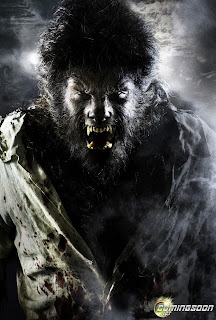
Personally, I think that the success of these films is mostly thanks to the gothic genre itself, the idea of the doppleganger and the strange and dangerous 'other' is rampant in this genre, and the centrality of the concept of duplicity and disguise transposes itself well onto contemporary society. Today, we are lead to beleive that we are surrounded by dark and dangerous malevolent forces. If 9/11 has taught us anything, it is that we need to be wary of the invisible yet mortal threat that surrounds us. So similar to the strange creatures that roam the streets of late Victorian London in gothic fiction, Terrorism is a peculiar yet palpable threat. The fear and anxiety experienced in wider society is replaced by thrill and excitement in the parallel world of cinema. Classic escapism, and boy does Hollywood know the selling power of Soma cinema.


Wolfman begins with a full moon and, predictably enough, a strange wolf like creature prowling around the local vicinity and eventually ripping a mystical band of travellers to shreds. Our man Lawrence Talbot (Del Toro), in pursuit of whoever killed his brother, gets bitten by that very same beast, and through the course of the film we witness his painful (for us as well as him) realisation of the fact that he has become infected by the creature and is in fact a werewolf; psychological strife, crises and general chaos ensue.
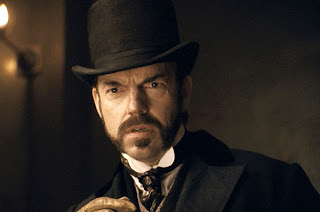

Universal have spent alot of money producing and promoting this film, and with the heavyweight cast (Weaving a particular favourite) and decent enough trailers, as well as my interest for gothic literature, I thought the film would deliver. In retrospect, Universal should really have given up on the ill-fated Wolfman when the lengthy and costly delays (the film was originally due for release in 2007) began to threaten this film ever coming into existence.


Wolfman attempts so much but achieves so little. Johnston's attempts at creating a full blooded cat-and-mouse action film are undermined by the poor and dated CGI, the rather repetitive nature of the werewolf's rampages and the underwhelming and forgettable transformation of Lawrence Talbot from man to wolf, which should really prove a defining moment in the film, yet just proves to be another of the film's minor inconveniences to watch. Likewise, his attempts to stir up a worthwhile romantic subplot are scuppered by a rather forced script; cue eye rolling when Lawrence's brother's widow, Glen, gives Lawrence a dough eyed look when they first clap eyes on each other. Similarly, wooden acting on the part of Del Toro, and simply lack of time to develop anything meaningful, or even mildly beleivable for that matter, in the way of romance, seriously undermine the film's ambitions to integrate a credible romance plot. Interestingly, Johnston also tries to develop a psychological thriller dimension to this film. With fathers, sons, parricide, fratricide, flash backs and repressed mothers everywhere you turn, Freud's influence is not hard to detect. However, the whole mechanics of it just don't work and remain underdeveloped. For example, Sir John Talbot (Lawrence's father) played by Anthony Hopkins, posseses a vendetta against his son that is as baffling as it is unexplained, we know next to nothing of Lawerence's deceased mother, so the lengthy conversations that ensue between father and son about said mother lack meaning or dramatic interest for the audience. Furthermore, Lawrence's admission into a mental asylum and his subsequent torture (due to him being discovered a werewolf) is difficult to watch not becuase it is in any way disturbing, but because it is so badly done and so packed full with cliche's, using the gripping asylum scene in Changeling (2008) as a benchmark, Wolfman's treatment of mental institutions is as unsubtle as it is dated, this film shows very little progression from the cliche ridden house-of-horrors mental asylum's in films like Bedlam (1945).

The main problem with this film is that it never really gets going, it promises to deliver on so many levels; action, romance, psychological thriller, yet a satisfying conclusion to any of the subplots is never reached. Similarly, many of the visuals in this film are good, the Talbot's stately home is battered yet beautiful and there are many picturesque scenes in which the retina can indulge, but the visuals are undermined by CGI that is so poor that it immediately breaks the spell of the film. As such, Wolfman is like a bric-a-brac stall of ideas and concepts. The result of all these contradictory drives is that the film is rather confused, and confusing if you try to look at it on any level other than the plot that is being slowly dished out to you. Whilst films like Sweeney Todd seem to embrace the gothic spirit and add a fresh visual and artistic dimension to the classic gothic tale, Wolfman appears to be exploiting the rich vein of interest in gothic films by presenting an unoriginal and very generic rehash of the werewolf mystery, one that has been seen more tastefully and stylishly done in Harry Potter: The Prisoner of Askaban (2004), a film which creates more drama and intregue in werewolves in ten minutes than Wolfman creates in an entire film.


Despite the heavyweight cast and universal studios label, this film is a real disappointment. Wolfman does have mass appeal, and the plot is passable as 'entertaining' but it relies far too heavily on the popularity of gothic film to make it work, there is precious little beyond the incessant pandering to gothic taste, and as a standalone example of gothic cinema, removed from its current cultural context, there has been and will be better work done. There is little doubt that Universal had plans to develop Wolfman into more films, and they may well do. Whilst they will get away with it for this first effort, there is no longevity in Wolfman, and the sequel will certainly flop.

**********

Verdict: A passable gothic action thriller, but there are better examples out there, Wolfman is too dogged by cliche and too overrun with half baked ideas to have any lasting impact, or to encourage a sequel. For a decent and thought provoking gothic thriller, try the recently released Dorian Gray, a flawed film, but one in which the spirit of gothic cinema is accurately embodied, and, what is more, is British made.